
12 – So what makes for better healthcare?
In this Chapter: Introduction (this page) What might the ideas in this website look like for you? Shared decision making: […]
| 0 Comments
Linguistic strategies for improving informed consent in clinical trials among low health literacy patients
Evidence-based guidance on how to improve informed consent processes for patients being invited to participate in clinical research.
| 0 Comments | Evaluated
Informed Health Choices Primary School Resources
A textbook and a teachers’ guide for 10 to 12-year-olds. The textbook includes a comic, exercises and classroom activities.
| 0 Comments | Evaluated
Know Your Chances
This book has been shown in two randomized trials to improve peoples' understanding of risk in the context of health care choices.
| 0 Comments | Evaluated
McMaster Evidence-Based Clinical Practice Workshop Resources – Therapy module
This is the therapy module resources provided to the attendees at the McMaster Evidence-Based Clinical Practice Workshop.
| 0 Comments
McMaster Evidence-Based Clinical Practice Workshop Resources – Systematic review module
The Systematic review module resources provided to the attendees at the McMaster Evidence-Based Clinical Practice Workshop.
| 0 Comments
How well is the clinical importance of study results reported?
How well is the clinical importance of study results reported?
| 0 Comments
What is meant by intention to treat analysis? Survey of published randomised controlled trials
Results of a survey to document the meaning of ‘intention to treat’ analysis.
| 0 Comments
Blinding in clinical trials and other studies
Simon Day and Doug Altman discuss blinding in clinical trials.
| 0 Comments
Distinguishing between “no evidence of effect” and “evidence of no effect” in randomised controlled trials and other comparisons
Distinguishing between “no evidence of effect” and “evidence of no effect” in randomised controlled trials and other comparisons.
| 0 Comments
Tips for learners of evidence-based medicine: 1. relative risk reduction, absolute risk reductions and number needed to treat
Relative risk reduction, absolute risk reduction and number needed to treat.
| 0 Comments
Basic statistics for clinicians: 1. Hypothesis testing
The statistical concepts of hypothesis testing and p values.
| 0 Comments
Basic statistics for clinicians: 2. Interpreting study results: confidence intervals
Interpreting study results: confidence intervals.
| 0 Comments
Basic statistics for clinicians: 3. Assessing the effects of treatment: measures of association
Assessing the effects of treatment: measures of association.
| 0 Comments
Tips for teachers of evidence-based medicine: Relative risk reduction, absolute risk reduction and numbers needed to treat
Tips for teachers of evidence-based medicine: 1. Relative risk reduction, absolute risk reduction and number needed to treat.
| 0 Comments
The 2011 Oxford CEBM Levels of Evidence: Introductory Document
The 2011 Oxford Centre for Evidence-Based Medicine’s Levels of Evidence.
| 0 Comments
Tips and tricks in performing a systematic review
Why do, and what to do when starting a systematic review.
| 0 Comments
Meta-analysis: Its strengths and limitations
The strengths and limitations of meta-analysis.
| 0 Comments
Meta-analysis, collaborative overview, systematic review: what does it all mean?
Mike Clarke’s 9-minute read on meta-analysis, collaborative overview, systematic review.
| 0 Comments
The interpretation of clinical trials
Peter Greenberg’s 9-minute read on the interpretation of clinical trials.
| 0 Comments
Evidence Based Drug Therapy: What Do the Numbers Mean?
Strengths and limitations of different measures of the effects of treatments.
| 0 Comments
Harm
A University of Massachusetts Medical School text on adverse effects of treatments.
| 0 Comments
Therapy
A University of Massachusetts Medical School text discussing the strengths and limitations of different measures of the effects of treatment
| 0 Comments
What Evidence in Evidence-Based Medicine?
Philosopher John Worral’s reflections on the evidence used in Evidence-Based Medicine.
| 0 Comments
You Can’t Trust What you read about nutrition
Beware of misleading correlations between foods and chance associations with other factors.
| 0 Comments
Association is not the same as causation. Let’s say that again: association is not the same as causation!
This article explains how to tell when correlation or association has been confused with causation.
| 0 Comments
Evidence for the frontline: A report for the Alliance for Useful Evidence
Jonathan Sharples’ introduction to evaluation in education, policing and other public services.
| 0 Comments
The DIY evaluation guide
The Educational Endowment Foundation’s DIY Evaluation Guide for teachers introduces the key principles of educational evaluation.
| 0 Comments
Using research evidence: a practice guide
NESTA’s guide to using research evidence to inform decisions in policy and practice.
| 0 Comments
Learning from research: systematic reviews for informing policy decisions
The EPPI Centre’s guide to using systematic reviews to inform policy decisions.
| 0 Comments
Patients as Consumers: Physician’s conflicts of interest
James Rickert talks with Helen Osborne about looking at healthcare from the perspectives of both a patient and provider.
| 0 Comments
Critical Appraisal of Research Evidence 101
Ontario Public Health Libraries Association guide to critical appraisal of research evidence.
| 0 Comments
Policy: twenty tips for interpreting scientific claims
This list will help non-scientists to interrogate advisers and to grasp the limitations of evidence.
| 0 Comments
Ice bucket challenge “breakthrough”? Experts pour cold water on superficial reporting
Beware claims of treatment breakthrough. They’re probably not.
| 0 Comments
The Slippery Slope: Is a Surrogate Endpoint Evidence of Efficacy?
A discussion of the dangers of relying on surrogate outcome measures.
| 0 Comments
Assessing Risk of Bias in Included Studies
An introduction to assessing risk of bias using the Cochrane ‘Risk of Bias Tool’.
| 0 Comments
Systematic Review X Narrative Review
Describing the distinct characteristics and goals of systematic and narrative reviews of the literature.
| 0 Comments
Reading the Medical literature
American College of Obstetricians and Gynaecologists (ACOG) introduction to critical appraisal and evidence-based medicine.
| 0 Comments
University of Western Australia: Bias Minimisation, were the right patients included?
University of Western Australia’s explanation of the importance of involving the right people in treatment comparisons.
| 0 Comments
University of Western Australia: Bias Minimisation, randomisation and blinding
University of Western Australia’s explanation of why random allocation to comparison groups and blinding (if possible) are important.
| 0 Comments
Sun Downstate; The Double Blind Method
Suny Downstate’s explanation of why blinding is important in assessing the effects of treatments.
| 0 Comments
Suny Downstate; Randomized Controlled Studies
Suny Downstate’s explanation of why random allocation to treatment comparison groups is important.
| 0 Comments
Suny Downstate; Systematic Reviews and Meta-analysis
Suny Downstate’s explanation of why it is important to consider all studies addressing a specific question.
| 0 Comments
What is a meta-analysis? How to use a systematic review
Oxford University’s Centre for Evidence-Based Intervention guide on how to use evidence from systematic reviews.
| 0 Comments
What is a meta-analysis?
An explanation of meta-analysis from Oxford University’s Centre for Evidence-Based Intervention.
| 0 Comments
Is the therapy clinically useful?
An article from the PEDro database on whether a treatment is useful.
| 0 Comments
Is the trial valid?
An article from the PEDro database on assessing the validity of a study.
| 0 Comments
Evidence-Based medicine in Pharmacy Practice
An article by Suzanne Albrecht on Evidence-Based Medicine in Pharmacy Practice.
| 0 Comments
Goals and tools in Meta-analysis
Meta-analysis in Michigan State University’s Evidence-Based Medicine Course.
| 0 Comments
Goals and tools in Prognosis evaluation
How to assess prognosis in Michigan State University’s Evidence-Based Medicine Course.
| 0 Comments
Evaluating relevance
How to evaluate relevance of research in Michigan State University’s Evidence-Based Medicine Course.
| 0 Comments
Limitations of current clinical practice
Discussion of the need to recognise the limitations of current clinical practice in Michigan State Univ’s Evidence-Based Medicine Course.
| 0 Comments
Evidence-based medicine
The European Patients’ Academy web-based introductory course on Evidence-Based Medicine.
| 0 Comments
Teaching Tip: Understanding Regression to the mean in preparation for teaching EBM
Chris Del Mar uses dice to simulate the natural fluctuations in pain, and to illustrate regression-to-the mean by re-testing the outliers.
| 0 Comments
Building evidence into education
Ben Goldacre explains why appropriate infrastructure is need to do clinical trials of sufficient rigour and size to yield reliable results.
| 0 Comments
Anecdotes are great – if they convey data accurately
Ben Goldacre gives examples of how conclusions based on anecdotes and biased research can be damagingly misleading.
| 0 Comments
Studies of studies show that we get things wrong
Ben Goldacre gives examples of how conclusions based on anecdotes and biased research can be damagingly misleading.
| 0 Comments
Weasels Are on the Loose
Weaseling is the use of certain words to weaken a claim, so that the author can say something without actually saying it and avoid criticism
| 0 Comments
Taking account of the play of chance
Differences in outcome events in treatment comparisons may reflect only the play of chance. Increased numbers of events reduces this problem
| 0 Comments
Quantifying uncertainty in treatment comparisons
Small studies in which few outcome events occur are usually not informative and the results are sometimes seriously misleading.
| 0 Comments
Bringing it all together for the benefit of patients and the public
Improving reports of research and up-to-date systematic reviews of reliable studies are essential foundations of effective health care.
| 0 Comments
10 Components of effective clinical epidemiology: How to get started
PDF & Podcast of 1-hr talk by Carl Heneghan (Centre for Evidence-Based Medicine, Oxford) on effective clinical epidemiology.
| 0 Comments
Explaining the unbiased creation of treatment comparison groups and blinded outcome assessment
A class were given coloured sweets and asked to design an experiment to find out whether red sweets helped children to think more quickly.
| 0 Comments
5 reasons why you might not get the best healthcare
Five reasons why patients may not always get the best care available.
| 0 Comments
Tamiflu: securing access to medical research data
A campaign by researchers has shown that Roche spun the research on Tamiflu to meet their commercial ends.
| 0 Comments
The need to compare like-with-like in treatment comparisons
Allocation bias results when trials fail to ensure that, apart from the treatments being compared, ‘like will be compared with like'.
| 0 Comments
Why avoiding differences between treatments allocated and treatments received is important
Knowledge of which treatments have been received by which study participants can affect adherence to assigned treatments and result in bias.
| 0 Comments
The need to avoid differences in the way treatment outcomes are assessed
Biased treatment outcome assessment can result if people know which participants have received which treatments.
| 0 Comments
Avoiding biased selection from the available evidence
Systematic reviews are used to identify, evaluate and summarize all the evidence relevant to addressing a particular question.
| 0 Comments
Preparing and maintaining systematic reviews of all the relevant evidence
Unbiased, up-to-date systematic reviews of all the relevant, reliable evidence are needed to inform practice and policy.
| 0 Comments
Dealing with biased reporting of the available evidence
Biased reporting of research occurs when the direction or statistical significance of results influences how research is reported.
| 0 Comments
Using the results of up-to-date systematic reviews of research
Trustworthy evidence from research is necessary, but not sufficient, to improve the quality of health care.
| 0 Comments
Why treatment comparisons must be fair
Fair treatment comparisons avoid biases and reduce the effects of the play of chance.
| 0 Comments
Avoiding biased treatment comparisons
Biases in tests of treatments are those factors that can lead to conclusions that are systematically different from the truth.
| 0 Comments
Bias introduced after looking at study results
Biases can be introduced when knowledge of the results of studies influences analysis and reporting decisions.
| 0 Comments
Reducing biases in judging unanticipated effects of treatments
As with anticipated effects of treatments, biases and the play of chance must be reduced in assessing suspected unanticipated effects.
| 0 Comments
Recognizing researcher/sponsor biases and fraud
The vested interests of researchers and organizations tend to be reflected in reports of treatment research in which they are involved.
| 0 Comments
Video games and health improvement: a literature review of randomized controlled trials
This is a critical appraisal of a non-systematic review of randomized trials of video games for improving health.
| 0 Comments
Why comparisons must address genuine uncertainties
Too much research is done when there are no genuine uncertainties about treatment effects. This is unethical, unscientific, and wasteful.
| 0 Comments
Why treatment comparisons are essential
Formal comparisons are required to assess treatment effects and to take account of the natural course of health problems.
| 0 Comments
Why treatment uncertainties should be addressed
Ignoring uncertainties about the effects of treatments has led to avoidable suffering and deaths.
| 0 Comments
Making Sense of Screening
Screening tests can cause harm. This guide helps you to make sense of claims about screening for health conditions.
| 0 Comments
Testing Treatments
Testing Treatments is a book to help the public understand why fair tests of treatments are needed, what they are, and how to use them.
| 0 Comments
Does it work?
People with vested interests may use misleading statistics to support claims about the efects of new treatments.
| 0 Comments
How do you know which healthcare research you can trust?
A detailed guide to study design, with learning objectives, explaining some sources of bias in health studies.
| 0 Comments
Smart Health Choices: making sense of health advice
The Smart Health Choices e-book explains how to make informed health decisions.
| 0 Comments
How to read articles about healthcare
This article 'How to read health news behind the headlines', by Dr Alicia White, explains how to assess health claims in the media.
| 0 Comments
Can measurements show if a treatment works?
An article discussing errors to avoid when testing treatments.
| 0 Comments
The basic principles of Evidence Based Medicine
A webpage explaining the foundations of systematic reviews.
| 0 Comments
Animal and Lab studies
A webpage explaining how results from animal studies may not be transferable to humans.
| 0 Comments
Commercialism
A webpage about commercialism and conflicts of interest in health research.
| 0 Comments
Be careful with composites
Kevin Lomangino's article discusses the limitations of composite outcomes and surrogate markers.
| 0 Comments
In defence of systematic reviews of small trials
An article discussing the strengths and weaknesses of systematic reviews of small trials.
| 0 Comments
Reducing the play of chance using meta-analysis
Combining data from similar studies (meta-analysis) can help to provide statistically more reliable estimates of treatment effects.
| 0 Comments
Absolute versus relative risk – making sense of media stories
This blog by Sarah Williams should help people who want to understand risk in the context of health and medical stories in the press.
| 0 Comments
Fair tests of treatments: a quick guide for journalists
When deadlines are pressing, how can journalists tell whether to believe claims about the effects of a new treatment or breakthrough?
| 1 Comment
Evidence Based Medicine Matters: Examples of where EBM has benefitted patients
Booklet containing 15 examples submitted by Royal Colleges where Evidence-Based Medicine has benefited clinical practice.
| 0 Comments
Shared Decision-Making
This resource from the Health Foundation shows how shared decision-making can be made to work in a typical consultation.
| 0 Comments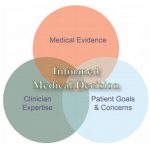
Communicating with patients on evidence
This discussion paper from the US Institute of Medicine provides guidance on communicating evidence to patients.
| 0 Comments
Surgery for the treatment of psychiatric illness: the need to test untested theories
Simon Wessely describes the untested theory of autointoxication, which arose in the 1890s and caused substantial harm to patients.
| 0 Comments
What did James Lind do in 1747?
A 2 minute Video clip of a BBC documentary recreating James Lind's celebrated experiment to test treatments for scurvy.
| 2 Comments
Foreword by Nick Ross
This book is good for our health. It shines light on the mysteries of how life and death decisions are […]
| 0 Comments
On being sucked into a maelstrom
In 2006, a patient in the UK, who happened to be medically trained, found herself swept along by the Herceptin […]
| 0 Comments
A tragic epidemic of blindness in babies
‘In the period immediately after World War II, many new treatments were introduced to improve the outlook for prematurely-born babies. […]
| 0 Comments
Anecdotes are anecdotes
‘Our brains seem to be hard-wired for anecdotes, and we learn most easily through compelling stories; but I am aghast […]
| 0 Comments
Shared decision making: a consultation for a common condition
Doctor: Well, you have moderate osteoarthritis of the knees, which is common as people get older. It’s often referred to […]
| 0 Comments
A new treatment for strawberry birthmarks
Treatments with dramatic effects are occasionally discovered by accident. Take the example of a condition that occurs in infants called […]
| 0 Comments
Mother’s kiss
Low-tech approaches can have dramatic effects too. Young children sometimes place small objects – plastic toys or beads, for example […]
| 0 Comments
Imatinib for chronic myeloid leukaemia
Impressive results have also been seen in patients given imatinib for chronic myeloid leukaemia [4], [5]. Before imatinib was introduced […]
| 0 Comments
Laser treatment of portwine stains
The birthmarks known as portwine stains are caused by permanent and malformed dilated blood vessels in the skin. Commonly occurring […]
| 0 Comments
Breast cancer
The treatment of breast cancer provides another example of professional uncertainty. There is considerable variability in the use of surgery, […]
| 0 Comments
Antibiotics in pre-term labour
Fair tests of treatments with hoped-for beneficial effects, and which are assumed to be harmless, can show that neither is […]
| 0 Comments
Caffeine for breathing problems in premature babies
Large variations in the treatments used for a particular condition provide clear evidence of professional uncertainty about the relative merits […]
| 0 Comments
Genetic tests: sometimes useful, often dodgy
Not so long ago ‘genetic testing’ was more or less confined to generally rare, single-gene disorders – for example, the […]
| 2 Comments
Lung cancer screening: early but not early enough?
Screening may detect disease earlier, but not always early enoughto make a difference (see Figure). Some cancers, for example lung […]
| 0 Comments
Prostate cancer screening: clear harms with uncertain benefits
Prostate cancer is the second most common cancer in men worldwide,14 and broadly falls into two types. Some men have […]
| 0 Comments
Breast cancer screening: well established but remains contentious
Since routine breast screening with mammography is well established in many countries one could well assume that mammographic screening must […]
| 0 Comments
Abdominal aortic aneurysm screening: proceed with care
At the other end of the age spectrum, abdominal aortic aneurysm screening can also be beneficial. The aorta is the […]
| 0 Comments
Phenylketonuria screening: clearly beneficial
Newborn babies are routinely screened for an inherited disease called phenylketonuria (PKU). Babies with PKU are unable to process phenylalanine, […]
| 0 Comments
3 – More is not necessarily better
In this Chapter: Introduction (this page) Intensive treatments for breast cancer Mutilating surgery Bone marrow transplantation Dare to think about […]
| 0 Comments